
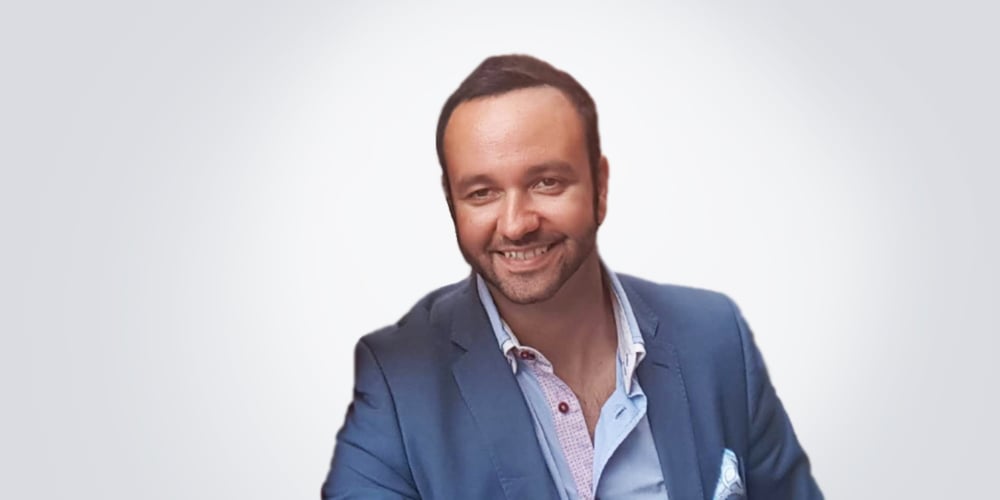
 Professor Emmanuel Tsekleves · 240K+ followers on LinkedIn
Finish your PhD or DBA alongside a full-time career, with an examiner reading it before yours does.
You've done the hard part. You just haven't been shown what "finished" looks like from the other side of the table.
I work with directors, senior managers and working professionals finishing a PhD or DBA alongside a full-time career. I've examined 45+ doctoral theses, so I can show you what your examiner will actually assess, and give you the structure to get there on ten to fifteen hours a week, not forty. Not what the textbooks say. What passes.
From $1,000 a month · Three months minimum, then month to month · a maximum of ten mentees at a time
35+
Working Professionals Mentored to PhD/DBA Completion
45+
Doctoral Theses Examined Across 15+ Universities
130+
Peer-Reviewed Publications
£9M
Research Funding Secured
“Working with you is the difference between circling in eddies and moving confidently toward the finishing line.”
Angella Bent Thomas
DBA Candidate and Chief HR & Operations Officer
The Challenge
You're doing three jobs. And no one has read your work the way it will actually be judged.
A full-time career. Family responsibilities. And a PhD or DBA that demands a kind of academic rigour you haven't used in years.
The turnbacks are exhausting
You submit a chapter. It comes back. You revise. It comes back again. Months pass and the thesis "just drags on and on." One candidate called it "an albatross around my neck", and she believed she could have finished two years earlier. The problem is rarely effort. It's that no one has told you what "done" needs to look like, so every draft is a guess.
You know what to write. You just can't make yourself start
"I know what I need to do, but I can't, because my brain is all over." You open the document, read three more papers, rewrite the same paragraph, and close it having written nothing. It isn't laziness. It's perfectionism with no outside standard to aim at. When you don't know what "good enough" looks like, "perfect" becomes the only target, and perfect never comes.
The structure vanished, and the work started to stall
The taught phase gave you deadlines and a cohort. Then it stopped, and "you feel left on your own." With no structure and a full-time job, a week becomes a month and the research quietly stalls. It's the single biggest reason capable professionals finish late, or don't finish at all.
There's never a clear block of time for it
Your doctorate lives in the gaps: early mornings, late evenings, weekends that go to catching up on the day job. "Some weeks I do ten hours. Some weeks I do none." When work spikes, the thesis is the first thing to go, and every restart costs you another week just to remember where you were.
Your supervisor is good. They're also too close, and too stretched
"The advisor disappears unless I email him." "When I bring up a question, it's just up to you." Even an excellent supervisor is too close to your work to see it the way a stranger across the viva table will. That isn't a failure of supervision. It's the one perspective the system can't give you.
"Is it even good enough?"
You've written most of it, and a new worry sets in. "I finished, but have I really done a good job? Is it going to be good enough for the external examiner?" You can't answer that from the inside. You need someone on the outside who has been the examiner.
Academic writing is a different language now
It's been years since you wrote at an academic level. Turning an executive summary into an academic argument (analytical rather than descriptive, every claim cited, the whole thing telling one evidenced story) is one of the most underestimated challenges working professionals face. Relearning it while holding down a senior role is what no one warns you about.
Your examiners sent it back.
Major corrections or a resubmission, and a deadline you didn't choose.
Your viva is booked and you haven't opened the thesis in months.
The Solution
The Examiner's-Eye Method: built backwards from your viva
Most mentoring is reactive: you bring a problem, you get feedback. I work the other way round. Everything starts from what your examiner will actually assess, then works backwards into a plan you can run on ten to fifteen hours a week. It's personalised to your work, but it isn't improvised. It's a repeatable way of working that turns scattered effort into steady progress your examiner will recognise.
Your work chopped into pieces you can finish
Big, vague tasks are where weeks disappear. We break the thesis into fortnightly pieces small enough to finish around a full-time job, so you always know the one or two things that matter next, and why they matter to your examiner.
The examiner's read before the real one
I read your drafts the way an examiner does, from cold. Is the contribution clear? Is it new? Does the thesis tell one evidenced story? Does everything line up? You get candid, specific written feedback with examples: what's strong, what will draw questions in the viva, and how to fix it. Every draft, not just once.
A doctorate that fits your actual week
We build your thesis time into the calendar you really have. Which hours are protected, which tasks fit a forty-minute gap and which need a clear morning, and what gives way when work spikes. The plan bends around a busy month instead of collapsing, so a bad week costs you a week, not a term.
Accountability with an actual deadline
"I need someone who can say: let me see this in two days. Then no matter what happens, I'll make the time." That's the job. We set the next fortnight's priorities and I hold you to them, the way a supervisor who checks in twice a year never will.
Email support between sessions
Questions don't wait for the fortnightly meeting. A supervisor comment, a structural decision, a deadline: email me and get an answer while it still matters.
Using AI without skipping the learning
AI can save you hours, or it can quietly do the thinking your examiner is there to test. I'll show you where it helps in your research and where it costs you, so you use it without losing the skills the viva will ask you to show.
Viva-ready without a separate prep course
Because I feed you real examiner questions as we go, you're preparing for the viva without realising it. One mentee walked out saying the viva was "so easy! I didn't expect it." That's the goal: you defend an argument you understand, not a document you assembled.
Publication, and what comes after
For those who want it: which parts of your thesis can become papers, which journals fit, and how to adapt doctoral writing for peer review. Plus support with career positioning, monographs and white papers.
What happens between sessions
Most of the work happens between our meetings.
Send me a question by email and you'll get an answer within 48 hours, with a clear next step.
I'll advise you on publications: what to submit, where to send it, and whether it's ready.
I'll show you how to use AI in your doctorate without putting your examination at risk.
And I'll check in on you, so you don't lose a month without noticing.
What it's like from the inside
“The support I am receiving from his coaching is what was missing in my PhD journey. Supervisors have no time, and many are involved on a very high level only. At least now I see progress. I would highly encourage anyone trying to complete their dissertation to work with Emmanuel.”
NJ
PhD Candidate and Senior Consultant
“I was stuck on Chapter 4 and with a full workload and other commitments, I needed assistance to maintain momentum. The feedback I received, along with samples of how to resolve some problematic areas, was clear and precise. The encouragement and support I received was what I needed to forge ahead.”
M. Yeung
EdD Scholar-Practitioner, Canada
“I was at the stage of proposal development for my systematic review, and pretty much unaware of the steps to conduct one. What changed was the presence of a non-judgemental mentor with whom you could share your tiniest bit of work, or your struggles in balancing work and study. Without a doubt, I would recommend students who have a full-time job to work with Prof Emmanuel.”
Ramesh Krishnan
Postgraduate Researcher and Respiratory Therapist, Qatar
Your path to completion
- 1
1 · A short application
Two minutes: where you are, what's blocking you, your timeline, and whether the investment works for you right now. I read every one myself.
- 2
2 · A complimentary 30-minute call
If it looks like a fit, I'll send you a link to book a call. I'll ask about your stage, your obstacles and your deadline, and tell you honestly whether I can help and exactly how. If I'm not the right person, I'll say so, and point you somewhere better.
- 3
3 · Your Examiner's-Eye Map, within your first fortnight
Within two weeks of starting, you have your Examiner's-Eye Map: your thesis set against what an examiner in your field will assess, and the next six fortnights planned backwards from it. It's the first thing you get, and it becomes the frame for everything else: your writing, your methodology, your viva.
- 4
4 · Fortnight by fortnight
Bi-weekly sessions, reviews of your drafts, and email support in between. You always know what you're working on next and why it matters to your examiner.
- 5
5 · Submission, and a viva you're ready for
You submit a thesis you understand and can defend: an argument you can take into the viva room with confidence, because you know what the person on the other side of the table is looking for.
Your Mentor
Professor Emmanuel Tsekleves
I was a lost PhD student. Confused, overwhelmed, in my office at 2am drowning in papers. I made myself a promise: if I got through it, I'd help others through what I was struggling with.
I got through it. I went on to become a Professor at Lancaster University, where I'm now Emeritus, with 130+ publications, £9M in research funding, and 45+ doctoral theses examined across 15+ universities.
I've sat on the other side of the viva table 45+ times, and here's what I know: whether a candidate passes comfortably rarely comes down to the quality of the research. It comes down to whether the thesis shows the examiner what they're looking for. Most capable people were simply never shown that. That's the whole of what I do.
The Investment
From $1,000 a month
Three months minimum, then month to month.
Every month includes:
- •Two one-to-one sessions
- •Written feedback on your drafts, every time you send them
- •Email support between sessions
- •Your Examiner's-Eye Map within the first fortnight, and a fortnightly plan after that
- •Viva preparation built in from the start
- •Publication strategy, if you want it
From $1,000 a month. We meet fortnightly, I read your drafts between sessions, and your questions get an answer within 48 hours.
From $1,800 a month if we meet weekly and I'm reading at the pace you write, and your questions get an answer within 24 hours.
Most people work with me for three to six months, around one goal: getting it submitted, preparing for the viva, turning corrections around, or passing the upgrade panel. Where yours sits depends on how often we meet and how much reading there is. We'll size it on the call.
Set that against what the doctorate has already cost you: often $30,000 to $80,000, and several years. Another year of fees, a postponed promotion, or a viva that doesn't go well costs a great deal more. Think of it as insurance against the expensive mistakes.
“I could not have completed my Doctorate, I believe, without his guidance and professional support. My understanding of academic writing and research also changed once he was involved. I would tell any professional, very busy in their own career but determined to complete their Doctorate, to sign up and hire Dr. Tsekleves and not wait. Time is money in business, and the investment you make in yourself goes a long way.”
Holly Lyncooke
DBA, MBA, CDPSE, CSM, USA
“You have made my final journey much smoother with your support and guidance. I can't thank you enough.”
Sitira Williams
PhD Researcher and part-time Lecturer, De Montfort University, UK
The Guarantee
Why this is close to risk-free
You'll know exactly what your examiners will be looking for, and your thesis will be built to meet it. That's what 45+ examinations have taught me, and it's what I bring to your work every month.
“If, by the end of our first month, you don't have a clearer, examiner-aligned plan and more confidence about your next chapter than when we started, I'll refund that month in full.”
Your examiners make the final call, as they should. My job is to make sure nothing in your thesis gives them an easy reason to send it back. If working together saves you from even one expensive mistake (a failed defence, a year of avoidable turnbacks, major sections redone), it has more than paid for itself. Most of my mentees tell me it does that within the first month.
Is this right for you?
This is right for you if…
- ✓You're a director, senior manager, consultant, or a leader in business, healthcare or education, doing a PhD or DBA (and sometimes an EdD or DrPH) alongside a full-time career.
- ✓You've put real money and real time into your doctorate, and you can't afford to waste either.
- ✓You're working hard but not moving forward, and you suspect it's because no one has shown you what an examiner actually assesses.
- ✓You want feedback from someone who reads theses as an examiner, not just as a supervisor.
- ✓You'll show up, do the work between sessions, and act on specific direction.
- ✓You want to finish on a timeline you can commit to, not "eventually".
This isn't right for you if…
- ×You want someone to write your thesis for you, or to tell you what you want to hear. My mentoring is honest, specific, and sometimes uncomfortable. That's why it works.
- ×You're doing a full-time PhD without professional experience. My one-to-one work is with working professionals.
Not ready for one-to-one? You can still work with me.
The Doctoral Circle
A similar Examiner's-Eye Method, in a small group of working professionals. The room where an examiner reads your pages, on a schedule rather than on demand. Live masterclasses, Q&A sessions and writing retreats with feedback on your work. $600 a term, about $200 a month.
See the CircleThe Examiner's Read
A one-off read of a chapter or your full thesis, the way your examiner will read it, with written feedback.
Ask about itPass or Revise
Free and live, once a month. I read a real thesis page the way an examiner would.
Get the next dateApply for a place
I work with a maximum of ten mentees at a time. That keeps it to a small number of working professionals, none of them lost in a list of fifty names. When someone finishes, a place opens and I fill it. There's no intake date. Just an application now, while there's a place.
It takes two minutes. I read every one myself, and if it looks like a fit I'll invite you to a complimentary 30-minute call. No obligation, and no sales pitch: just an honest conversation about your doctorate.
“My primary advisor has been replaced. The evaluation will have to be conducted once more, and this time it will follow the protocol and procedures stated in the PhD handbook. I will be present and able to defend my thesis. Thank you for your support and advice on how to move forward.”
OG
PhD Candidate and Research Consultant, US
“Thank you, Emmanuel, these are very helpful. I would not have thought about some of the questions. It has been a great learning experience and I am glad you do what you do.”
Boineelo Nthubu
PhD in Management Science, Lancaster University, UK
“You have been such a ray of hope for me, even as I think about my next phase of academic journey.”
IT
Doctoral Graduate and Lecturer, UK
“Thank you again for everything. I really appreciate all the things that you have done, and I can say that I have learned a lot from you. I hope we can work again in the future.”
BT
Part-time Lecturer and Doctoral Graduate, UAE
FAQ
Frequently Asked Questions
How is this different from working with my university supervisor?+
Your supervisor guides the research from the inside. I read it the way an examiner will, from cold. Even an excellent supervisor is too close to your work, and too stretched, to give you that view. This sits alongside your supervision. It does not replace it.
Can you work with someone in my field or at my stage?+
I've examined 45+ doctoral theses across 15+ universities, and I mentor working professionals from proposal through to viva. The method is the same whether you are in management, health, education or another professional field: what will the examiner actually assess, and how do we get your thesis there on the hours you have.
I've tried workshops and online courses before. Why would this be different?+
Workshops and courses teach a general method. I work on your actual chapters, on your actual week. You get written feedback on your drafts, a fortnightly plan, and email support between sessions. It is personalised, but it isn't improvised.
How much time will this take each fortnight?+
Two one-to-one sessions, plus the writing and revisions we agree. The plan is built for ten to fifteen hours a week around a full-time job, not forty. A bad week costs you a week, not a term.
How much does it cost?+
From $1,000 a month, rolling monthly, with no long contract. You can stop with a few days' notice. The rate is set by how much support your stage needs, so it is usually highest at the start and comes down later on.
What if it's more than I can invest right now?+
Say so on the application. You can still work with me. The Doctoral Circle is the same method in a small group, and Pass or Revise is free and live every month.
Do you offer a one-off thesis review or viva preparation?+
Yes. The Examiner's Read is a one-off read of a chapter or your full thesis, the way your examiner will read it, with written feedback. Mention it on the application and I'll tell you whether that, or mentoring, is the better next step.
A place opens when someone finishes.
From $1,000 a month · rolling monthly · a maximum of ten mentees